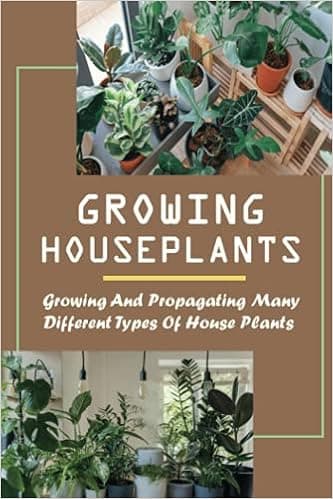
Growing Houseplants: Growing And Propagating Many Different Types Of House Plants: How To Grow And Take Care Of Indoor Plants
Houseplants are not living indoors by choice. Ever since Victorian plant collectors brought home exotic tropical specimens, we've been coaxing warm-climate natives to thrive inside our homes. The secret to keeping a houseplant alive is replicating its natural growing zone by giving it the amount of humidity, light, and water it prefers. Most houseplants fall into two categories, tropical (including ferns, palms, vines) or succulent (such as varieties of aloe, aeonium, and echeveria). In this book, you will find detailed information about growing and propagating many different types of house plants, from African violets to ZZ Plants in alphabetical order having beautiful full-colour photos of the adult plants. In each section, you will find exact details about growing that specific plant, including soil type, light requirements, watering, temperature, etc. You will also find step by step instructions for several different ways of propagating each plant that is specific just for that plant. All sections contain information on seeding, cloning, rooting in water, rooting in the soil, root division, and air division where available. There are more than 50 popular houseplants in this book. It's in alphabetical order so readers can look up plants instead of having to read or skim through the whole book just to find information on one specific plant. There are pictures of each plant.
- ASIN
- B09F18WTQ7
- Embedding
- CLIP ViT-L/14 · 768d
- Distance metric
- cosine
- Doc fetch
- 3mscache hitGET /v2/namespaces/amazon-products/documents/B09F18WTQ7
- Similar query
- 26msnearest_to_id → /query
Doc fetch goes through Layer's Aerospike pull-through cache; cache hit served the row without touching turbopuffer. The similar query asks Layer for nearest neighbors of the stored product vector — queries don't go through the doc cache, so no cache header is set.
You might also like