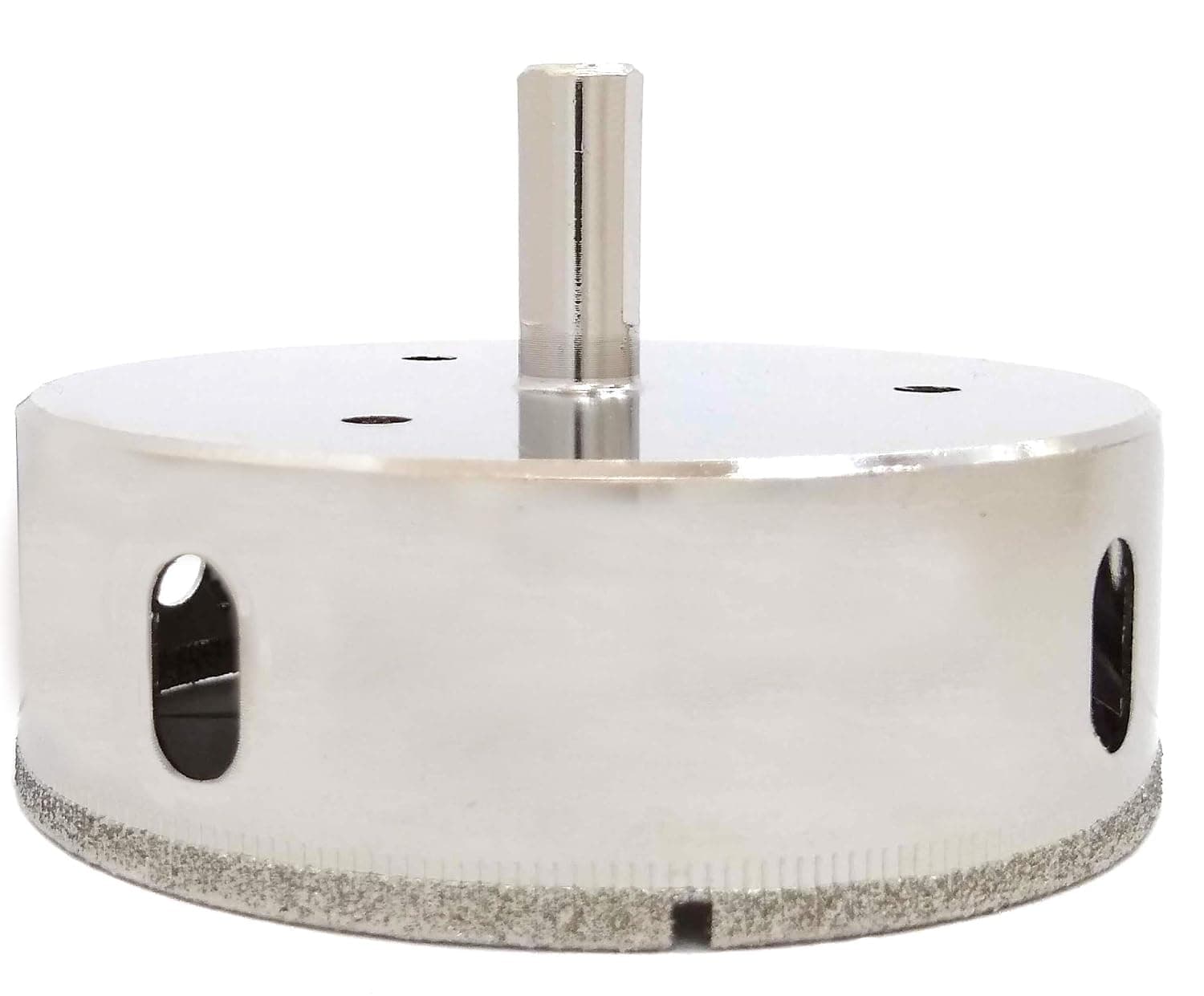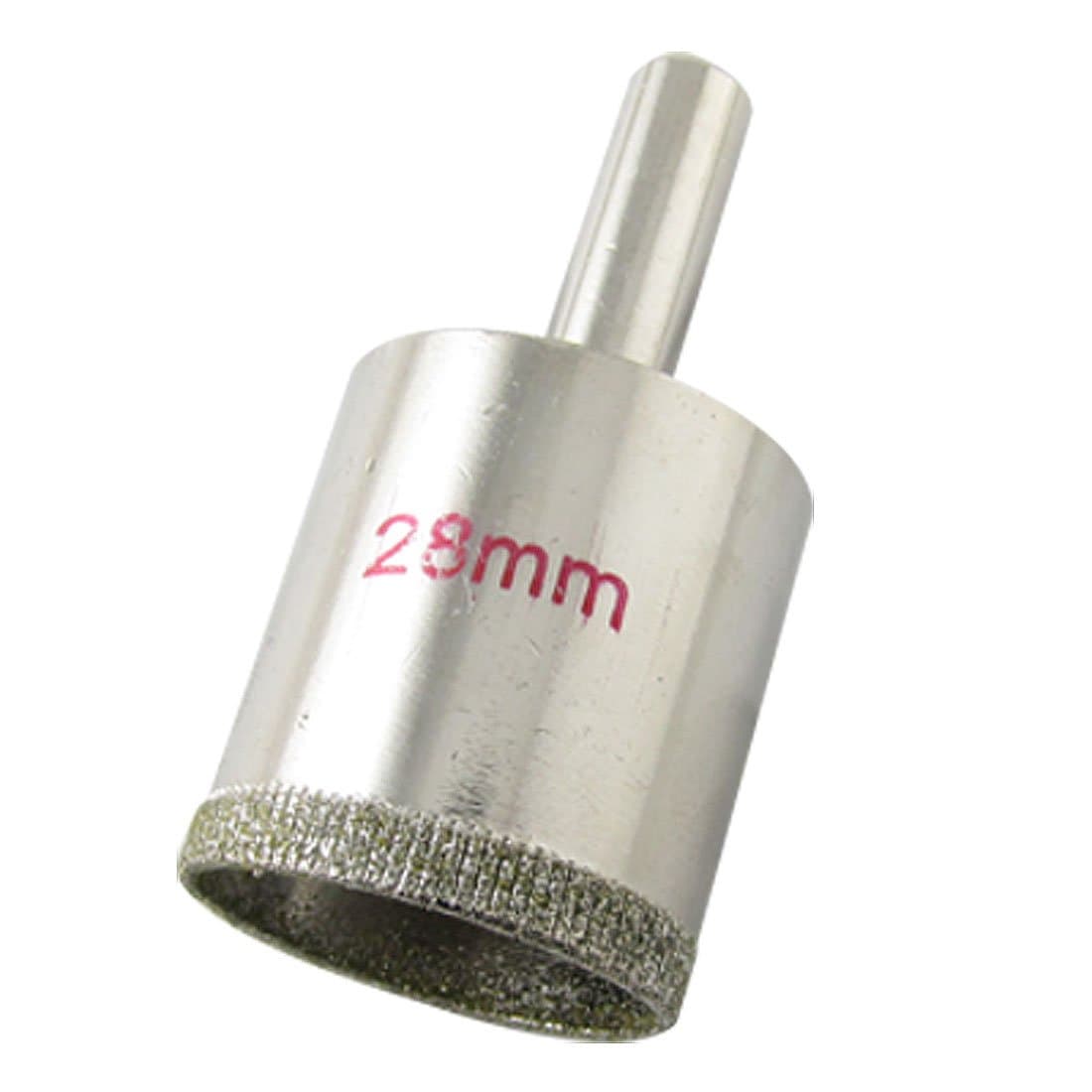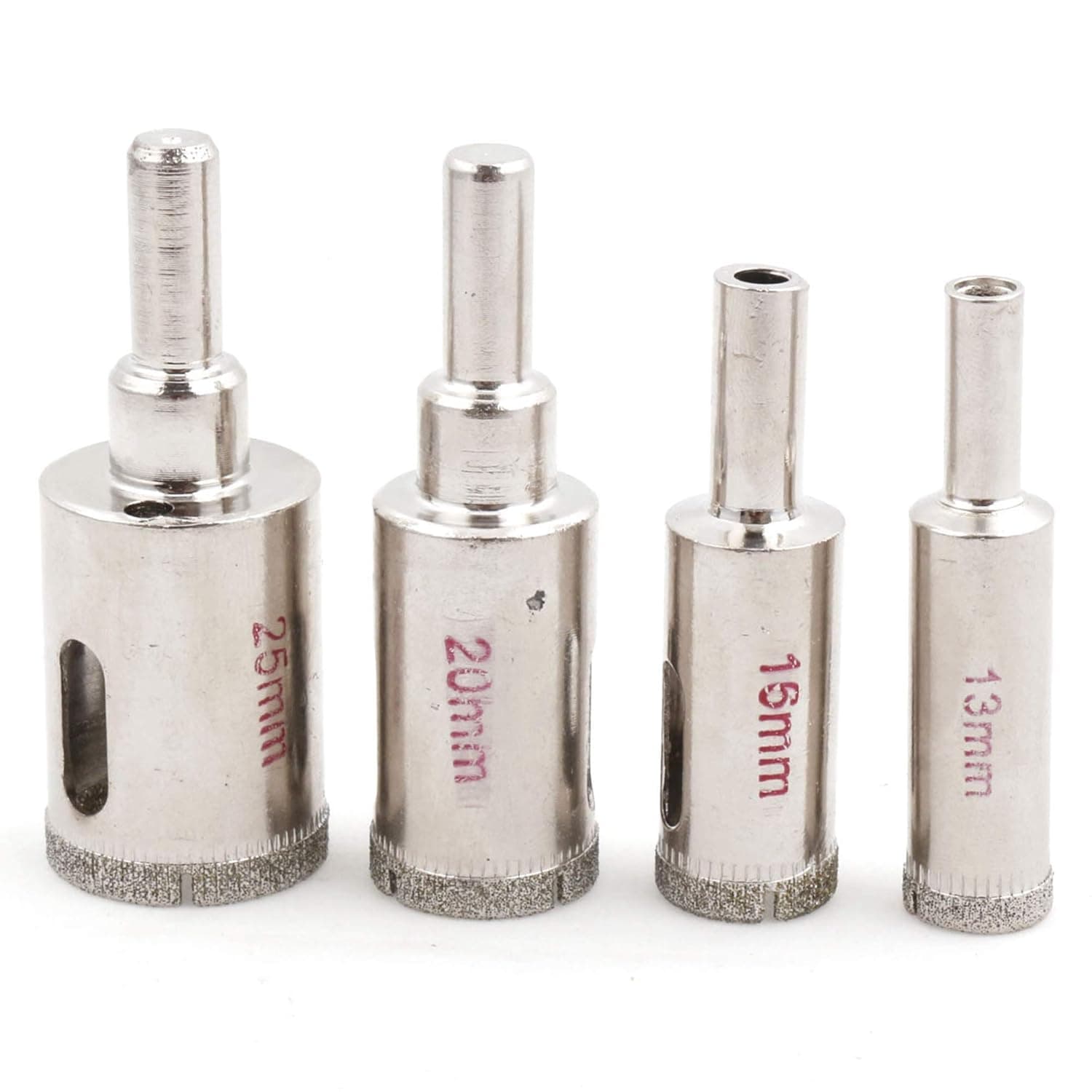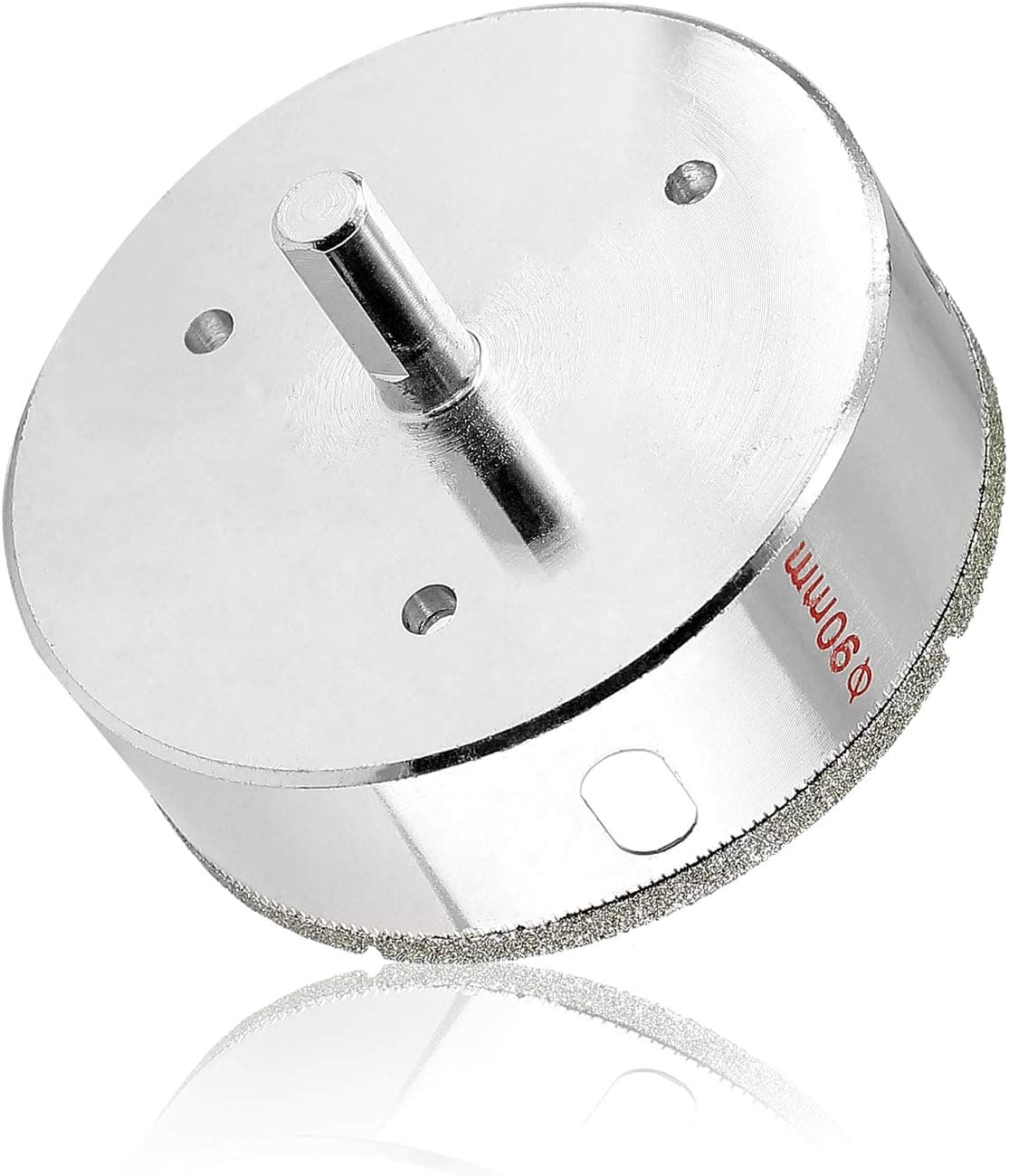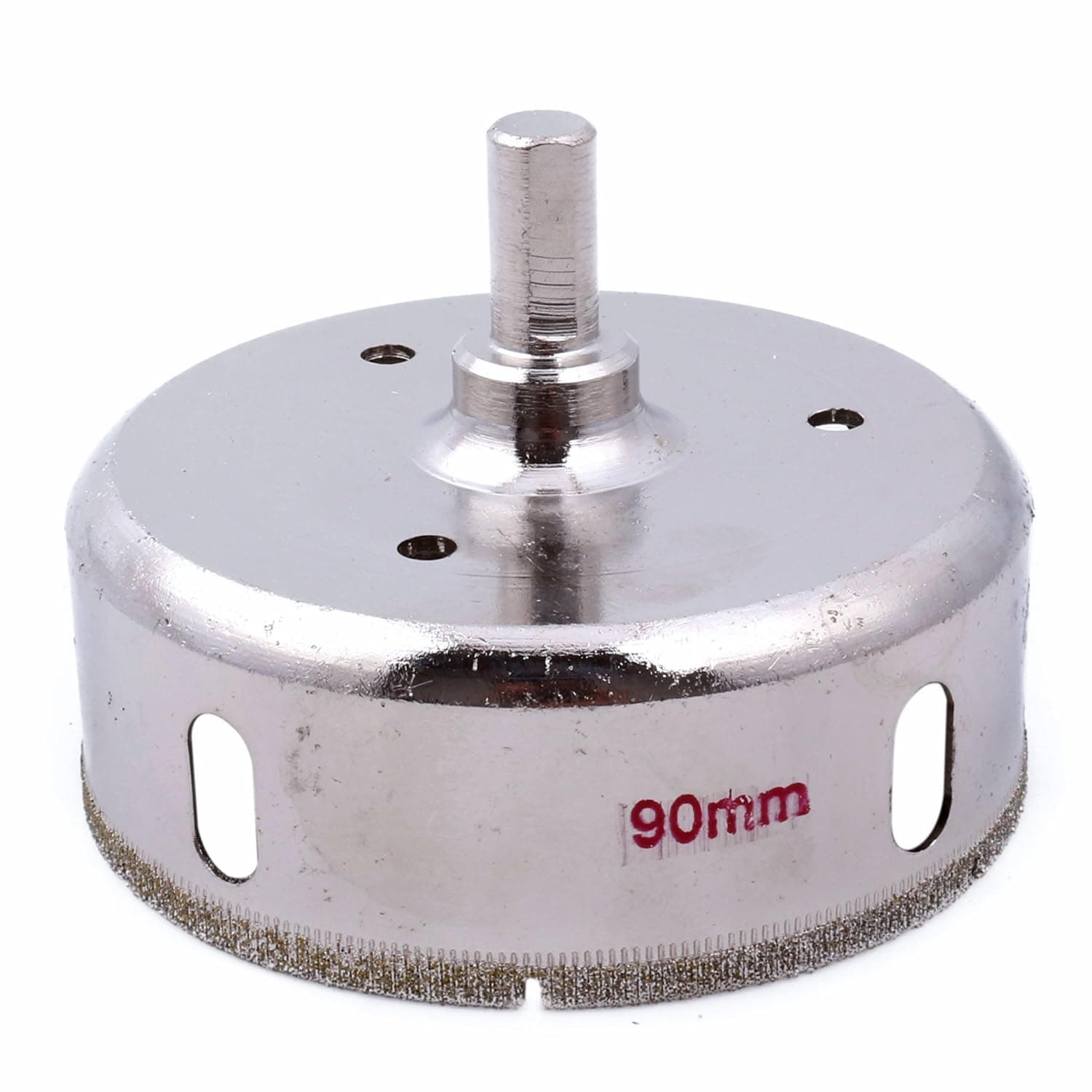
JINGLING 90mm Diamond Hole Saws Drill Bit Masonry Drilling Tools for Stone Glass Tile
90 mm 3-9/16 inch Diamond Coated Hole Saw Drill Bits for Stone Granite Marble Ceramic Product Specification Product Name: hole saw for tile, Diamond tip masonry bit, Stone cutting bits Outside Diameter : 90mm (3-9/16" inch) Inner Diameter: 86.8mm Hex Shank Diameter: 10 mm (3/8") Total length: 65mm (2-9/16") Drill depth: 29-30mm Quantity: 1 Piece Recommend Speed: 350-700RPM Use: Masonry Drilling Material: Diamond, steel Features Brand new & High quality Easy to use, good performance and long life Excellent for making clean and accurate hole on stone, granite, marble, tile Works better with a electric drill (Excluding in this item ) Diamond drill set with standard 10 mm shank that will fit cordless screwdrivers, drills etc or use in standard drill chuck Drilling speed: Drill a hole in seconds Use with water as a lubricant The diamond hole saw does NOT have center Pilot Drill There is no need for a Pilot Drill Bit, because pilots are not safe for glass Quick Tips 1. Please add water for coolant and drill slowly 2. Start drill at 45 degree to surface and align to 90 degree as hole forms 3. Never use drills while machine is in hammer action 4. Holes require no futher work as cutting is clean We can list any size( hole diameter from 6mm - 160mm) & amount of this product How to use a hand drill to drill holes in the stone/tile/glass? Step 1. The bit on the stone/tile/glass 45 degree, open a half-moon notch on it Step 2. Slowly up the bit to 60 degrees, and then gently drill Step 3. Reached 90 degrees, continue to drill Step 4. Drill through the stone/tile/glass finally, the technique requires a "wobble" of the drill rather that steady pressure straight on
- ASIN
- B09TRFPW48
- Embedding
- CLIP ViT-L/14 · 768d
- Distance metric
- cosine
- Doc fetch
- 2mscache hitGET /v2/namespaces/amazon-products/documents/B09TRFPW48
- Similar query
- 30msnearest_to_id → /query
Doc fetch goes through Layer's Aerospike pull-through cache; cache hit served the row without touching turbopuffer. The similar query asks Layer for nearest neighbors of the stored product vector — queries don't go through the doc cache, so no cache header is set.
You might also like