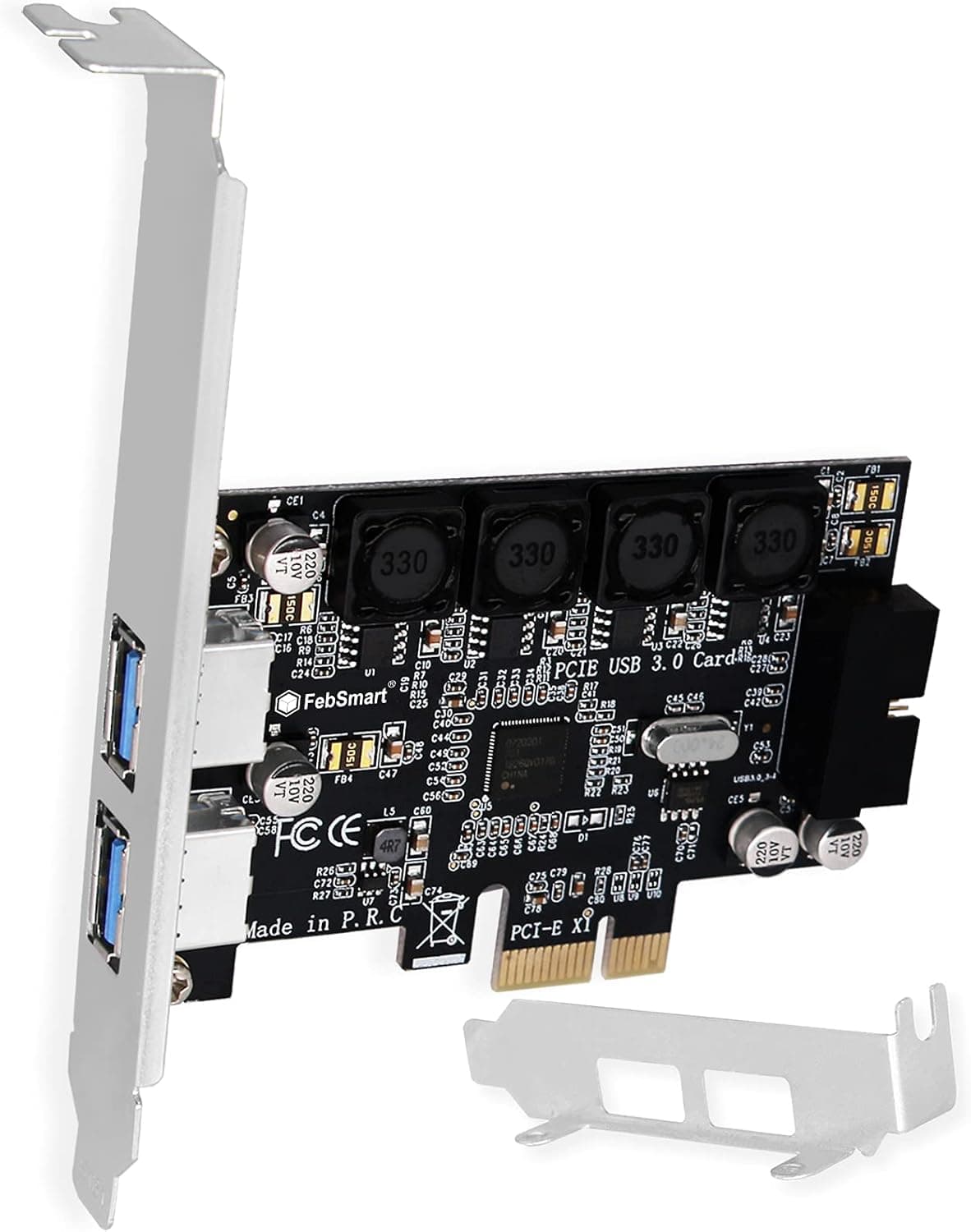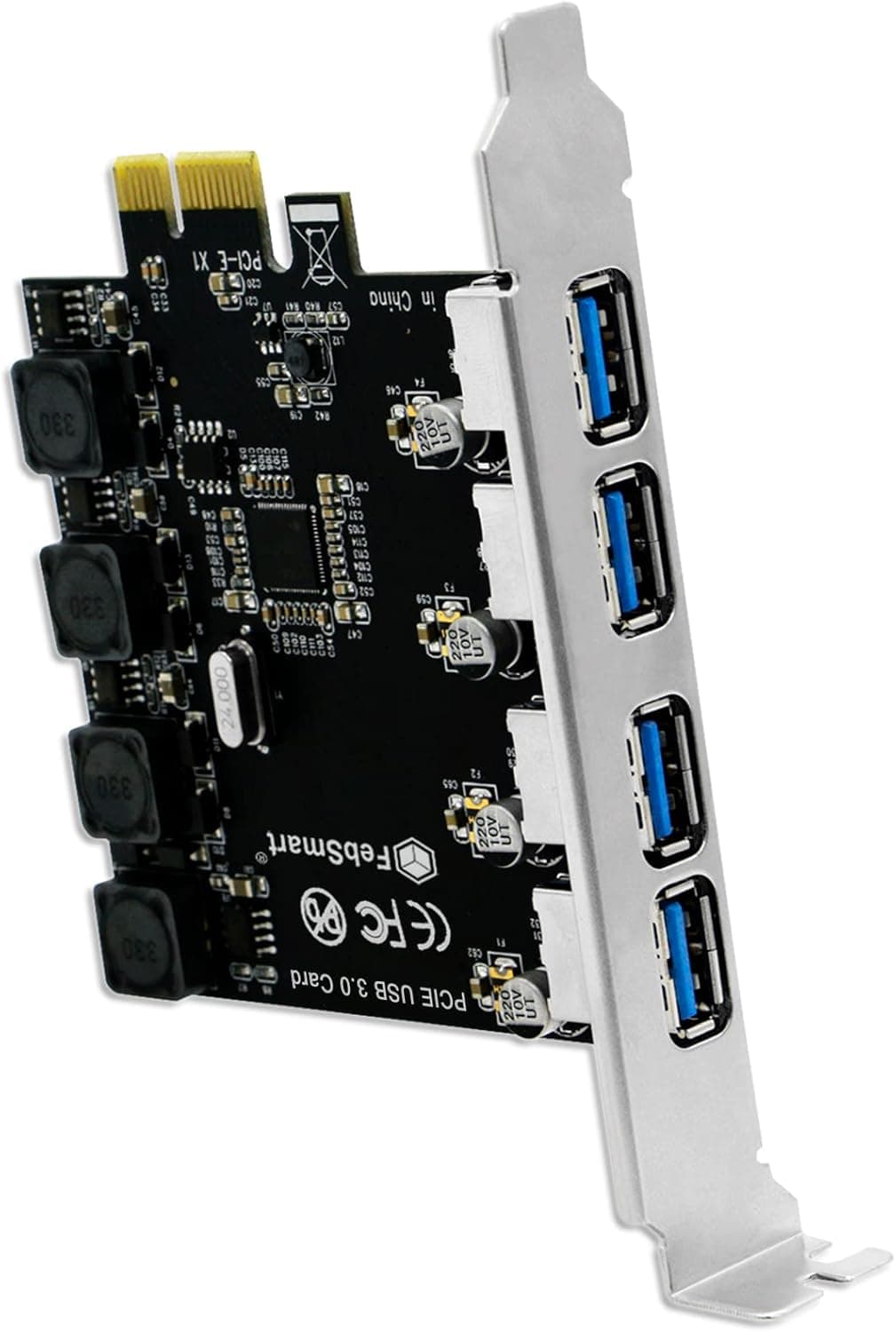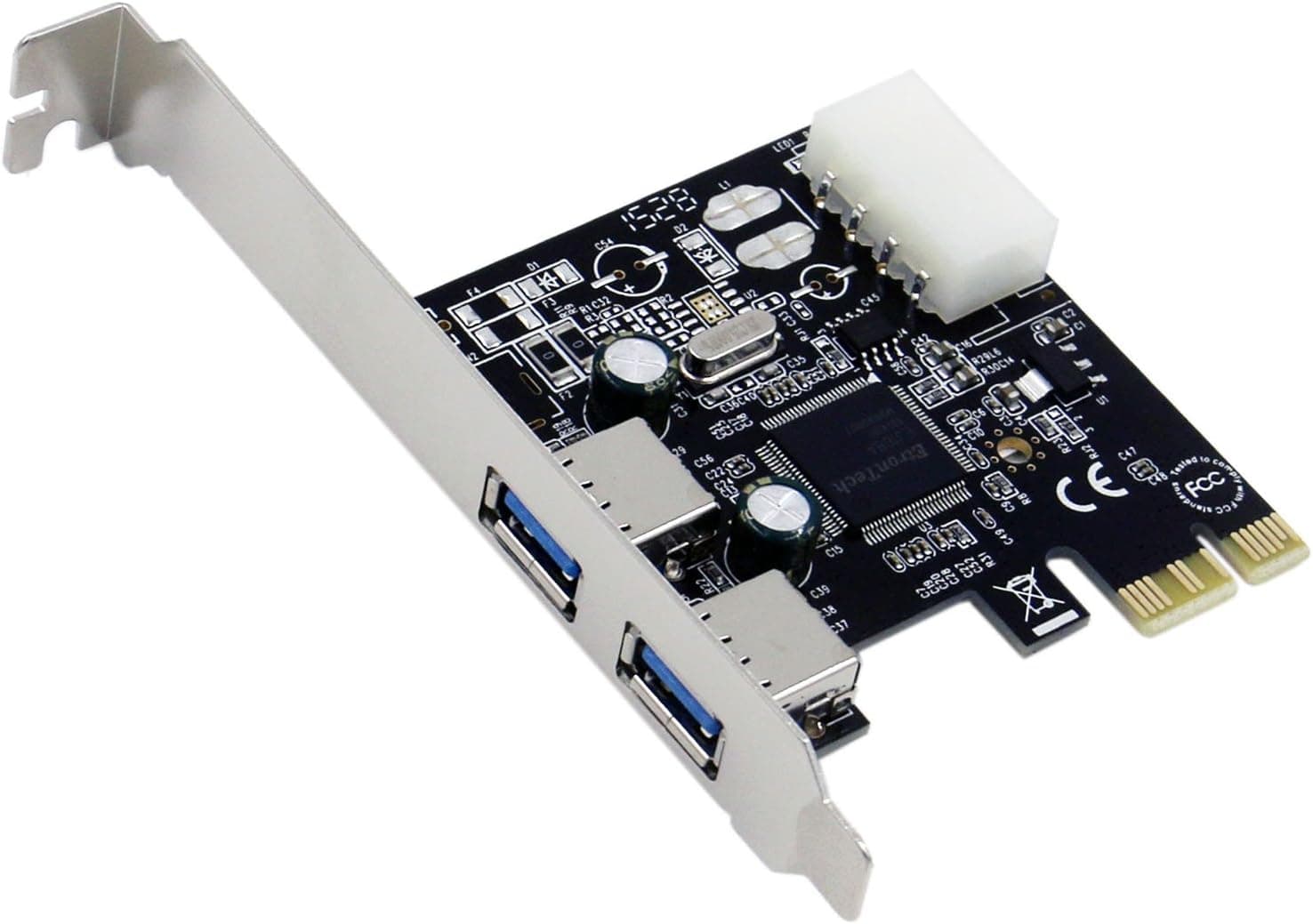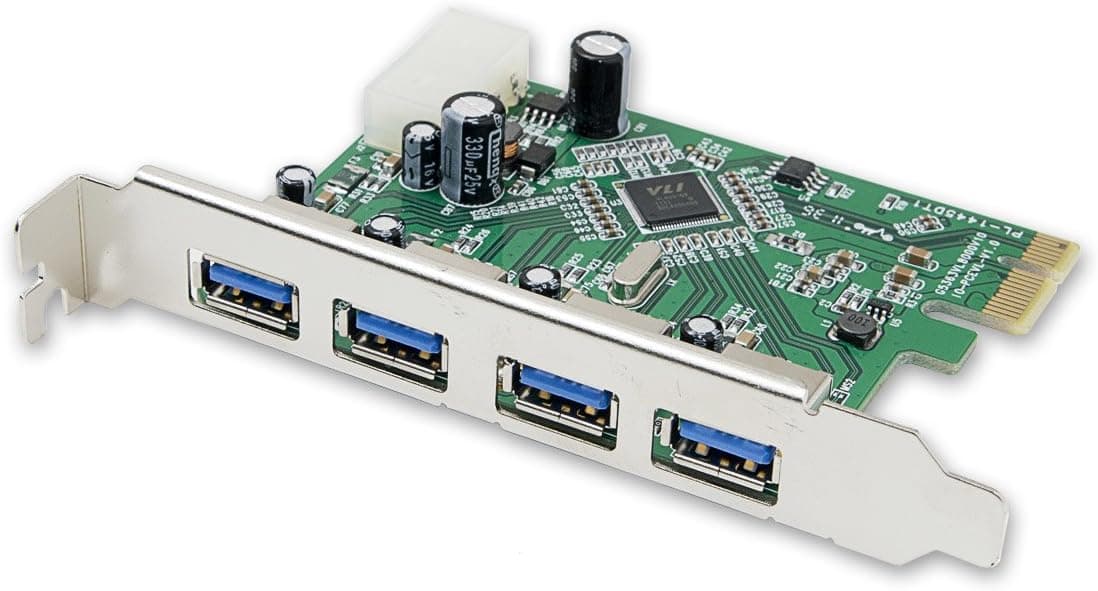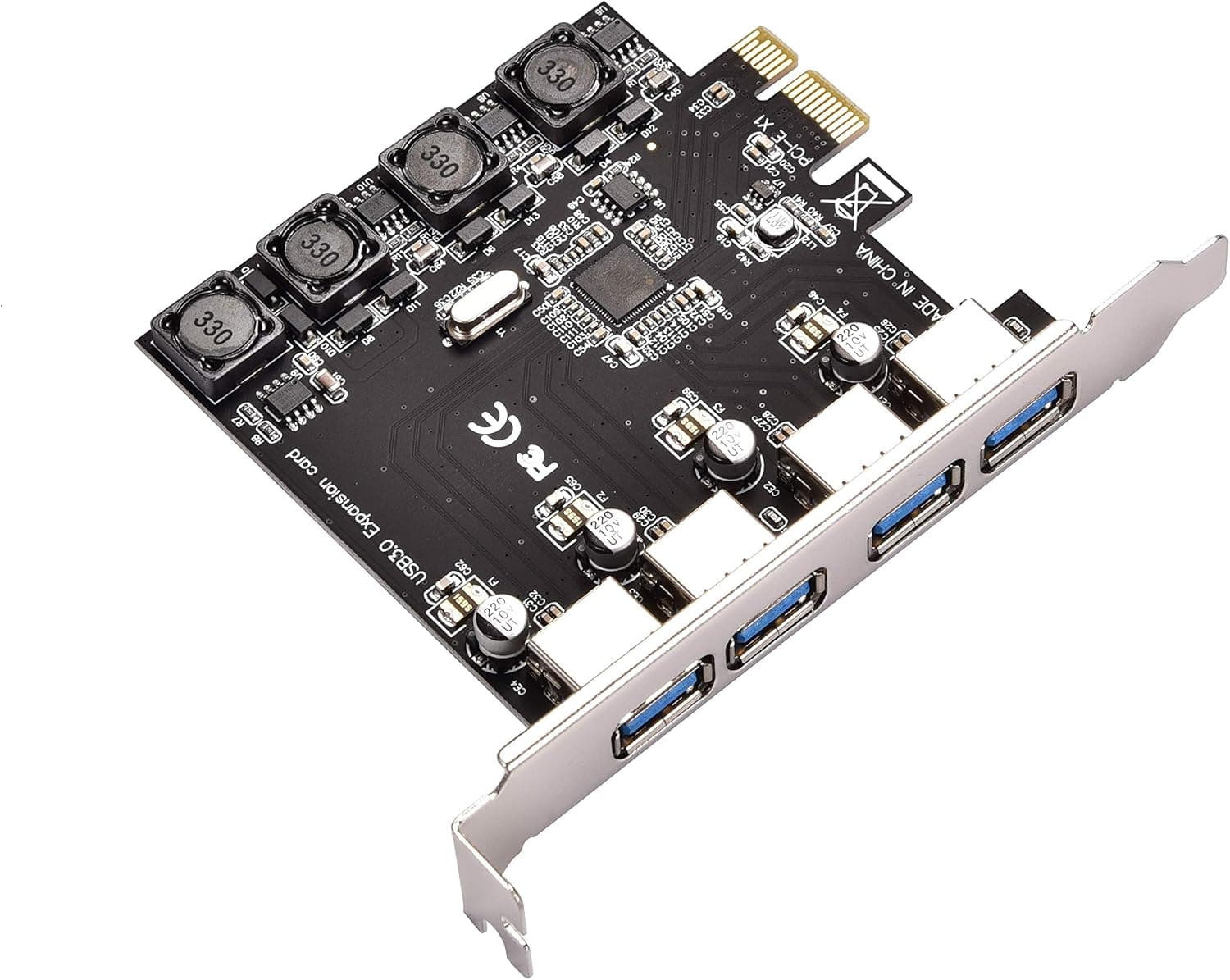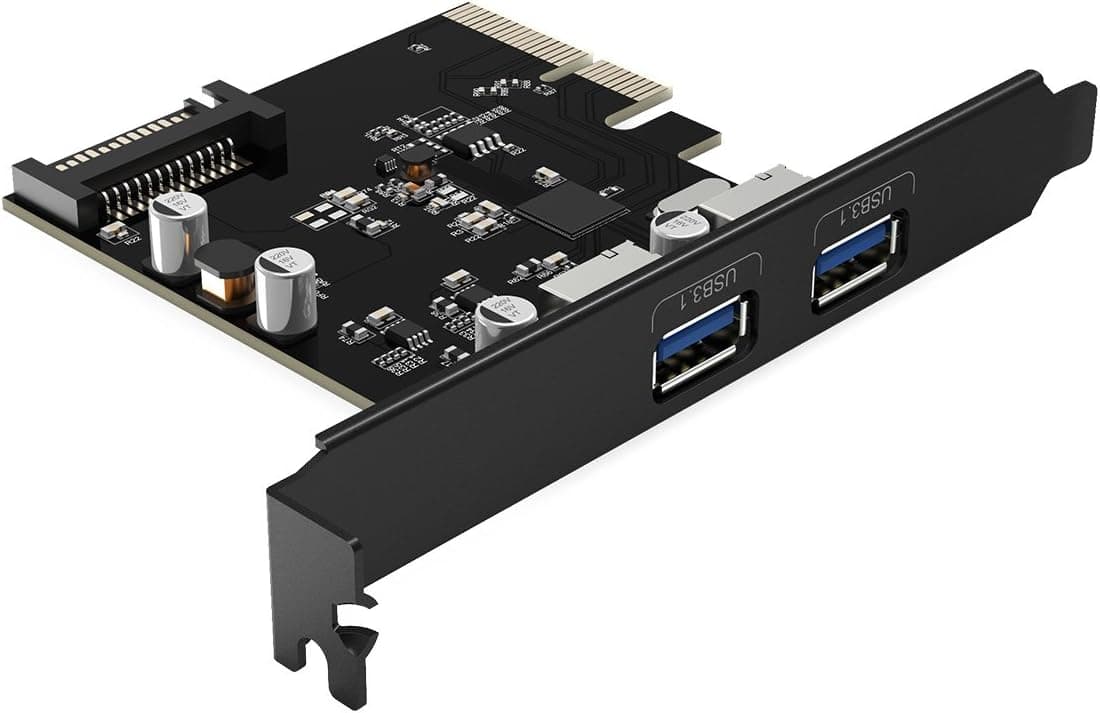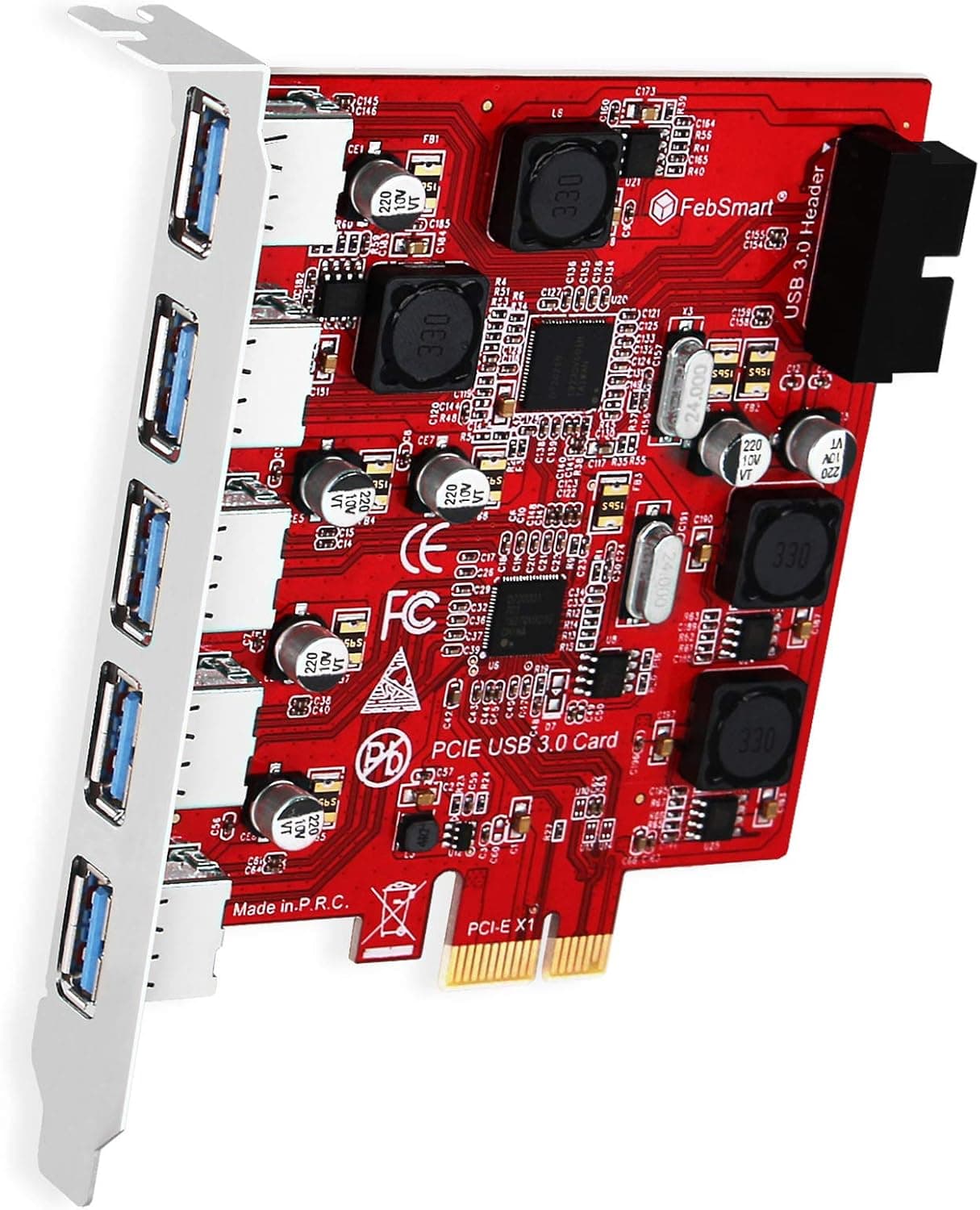
FebSmart 7-Ports Superspeed 5Gbps USB 3.0 PCIE Expansion Card, 5-Ports USB-A and an 19Pin USB 3.0 Header, Built in FebSmart Self-Powered Technology, No Need Additional Power Supply (FS-U7S-Pro)
1. FS-U7S-Pro is a PCIE X1 interface to 7-Ports (5X USB-A and 1X 19Pin USB 3.0 Header) USB 3.0 expansion card. 1X 19Pin USB 3.0 header will extend to 2X USB-A ports on Desktop PC¡¯s front pannel. Allow users add 7X 5Gbps max USB-A ports on Desktop PCs, will light up 7X high power consumption USB 3.0 devices which including indusrial cameras, VR-systems, USB 3.0 NVME enclosures, live broadcast devices, USB 3.0 SSD/HDD enclusures, USB 3.0 video adapters and USB 3.0 universal docking stations. 2. Based on 1X RENESAS UPD720201 5Gbps USB 3.0 host controller and 1X RENESAS UPD720210 5Gbps USB 3.0 HUB controller, will compatible with AMD, ARM, and Intel harware platform Desktop PCs. The added-on 7X USB 3.0 ports will share 5Gbps total bandwidth. It will compatible with 7X normal USB devices such as USB keyboard, USB mice, USB speakers, USB KVM switch, USB HUB, USB flash drive, printers, game pad, smartphone, tablet, and more USB-A interface devices. 3. Built in FebSmart Self-Powered Technology, no need to plug any additional power cables from Desktop PCs power supply unit. Allow each USB 3.0 port get 5V/2A 10W max (5V/12A 60W in total) power supply from motherboard directly for connected high power consumption USB 3.0 devices. FebSmart add 8X electronic safty fuse and 7X voltage stable capacitor and 4X voltage stable inductance on the USB expansion card, will protect users data and USB 3.0 devices, make sure connection safty.
- ASIN
- B0BFLWBS83
- Embedding
- CLIP ViT-L/14 · 768d
- Distance metric
- cosine
- Doc fetch
- 1mscache hitGET /v2/namespaces/amazon-products/documents/B0BFLWBS83
- Similar query
- 28msnearest_to_id → /query
Doc fetch goes through Layer's Aerospike pull-through cache; cache hit served the row without touching turbopuffer. The similar query asks Layer for nearest neighbors of the stored product vector — queries don't go through the doc cache, so no cache header is set.
You might also like